
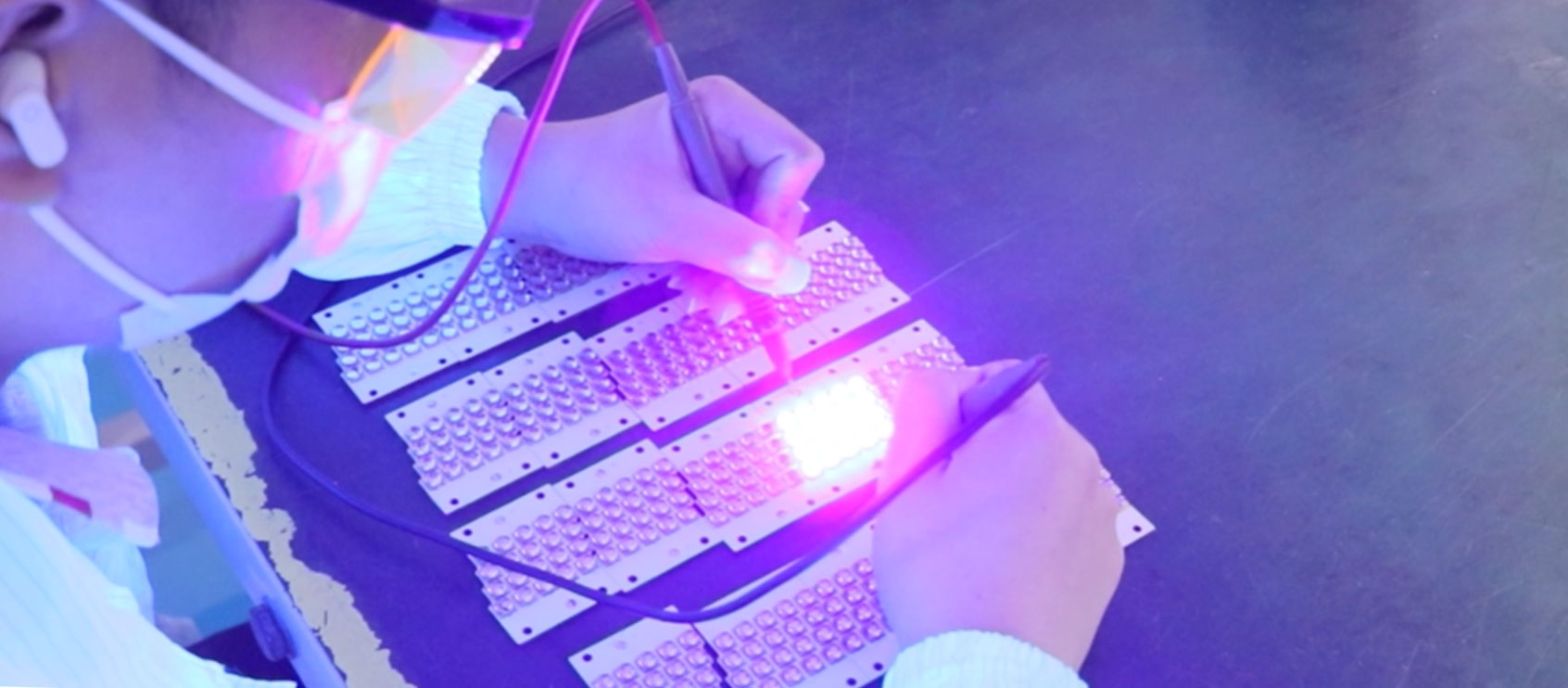
In the family of ultraviolet (UV) radiation, the 365nm wavelength belongs to the medium-long wave range of the UVA (near-ultraviolet) band (320-400nm). It features two key characteristics: "mild energy" and "strong penetration". It not only avoids the high irritation of UVC but also penetrates thin materials more easily than short-wavelength UVA (e.g., 320-340nm). Therefore, it is widely used in industrial production, daily detection, beauty care, and other fields, becoming a representative of "practical UV light".
I. Core Characteristics of 365nm UV Radiation: A "Mild and Efficient" UV Expert
To understand the functions of 365nm UV radiation, it is first necessary to clarify its unique physical properties, which are the key to distinguishing it from UV radiation of other wavelengths:
- Moderate Energy: The energy of 365nm UV radiation is approximately 3.4eV, lower than that of UVC (4.43-124eV) and short-wavelength UVB. It does not directly damage human cells or microbial DNA, and has minimal irritation to the skin and eyes. Strict protective measures are not required (only prolonged direct exposure needs to be avoided in daily use);
- Strong Penetration: It can easily penetrate ordinary glass, plastic films, thin coatings, and even penetrate the superficial layer of the skin's dermis. This characteristic makes it highly advantageous in "non-contact detection" and "deep curing" scenarios;
- Significant Fluorescence Excitation Effect: Most fluorescent substances (such as fluorescent agents, anti-counterfeiting inks, and biological markers) can efficiently absorb energy and emit visible light (e.g., blue light, green light) when irradiated by 365nm UV radiation. The excited fluorescence has high brightness and low interference, making it the "golden wavelength" for fluorescence detection.
II. Core Functions and Typical Application Scenarios of 365nm UV Radiation
Based on the above characteristics, 365nm UV radiation has applications across multiple fields, with each scenario accurately matching its advantages of "mildness + penetration + fluorescence excitation":
1. Fluorescence Detection: A "Revealer" for "Invisible Traces" 🔍
The most well-known function of 365nm UV radiation is to excite fluorescent substances to emit light, making "invisible information" or "contaminants" visible to the naked eye. It is widely used in anti-counterfeiting, quality inspection, safety inspection, and other scenarios:
- Anti-Counterfeiting Verification: Anti-counterfeiting marks containing fluorescent agents excited by 365nm UV radiation are printed on various documents (ID cards, passports, driver's licenses), banknotes, and luxury packaging. When irradiated with a 365nm UV lamp, exclusive fluorescent patterns (such as the "Great Wall" fluorescent pattern on the back of ID cards and fluorescent numbers on banknotes) will appear, enabling rapid identification of authenticity and preventing the circulation of counterfeit products;
- Quality Inspection of Food and Cosmetics: It is used to detect illegally added "industrial fluorescent agents" in food (e.g., flour, milk powder) (some unscrupulous merchants use fluorescent agents to improve the appearance of food) or illegal fluorescent whitening ingredients in cosmetics. When samples are placed under a 365nm UV lamp, abnormal blue light indicates the possible presence of fluorescent agents, ensuring consumer safety;
- Industrial Defect Detection: In the electronics industry, it is used to detect "invisible solder paste" on circuit boards (solder paste contains fluorescent components and is invisible to the naked eye when uncured) or to identify tiny cracks in plastic parts and glass products (if fluorescent penetrant remains in the cracks, it will emit light after irradiation with 365nm UV radiation), preventing substandard products from leaving the factory.
2. UV Curing: A "Rapid Adhesive" for Material Molding 🛠️
In industrial production, 365nm UV radiation is the core light source for UV curing technology. By activating photoinitiators, it enables rapid curing of inks, coatings, and adhesives within seconds to minutes, replacing the traditional "thermal curing" process and significantly improving production efficiency:
- Printing Industry: It is used in UV ink printing (e.g., packaging boxes, labels, plastic film printing). 365nm UV radiation can penetrate the surface layer of ink to activate deep photoinitiators, allowing the ink to dry and cure quickly, preventing smudging of printed patterns. The cured ink has strong adhesion and wear resistance, making it suitable for high-demand scenarios such as food packaging and electronic product casings;
- Electronic Component Encapsulation: Chips, capacitors, and other components on circuit boards need to be fixed and insulated with UV glue. 365nm UV radiation can penetrate the surface layer of UV glue to ensure complete curing of the deep glue layer, preventing component loosening or short circuits. The curing process involves no high temperature, so it will not damage precision electronic components;
- Nail Art and Jewelry Making: The curing of "gel polish" for nail art and epoxy resin jewelry relies on 365nm UV radiation. Its mild energy enables uniform curing of the gel layer without deforming nails or resin materials, and the finished product has high gloss and is not easy to peel off.
3. Beauty Care: A "Gentle Assistant" for Skin Care 💆
With the characteristics of "penetrating the superficial layer of the dermis" and "mild energy", 365nm UV radiation is mainly used for auxiliary skin care in the beauty field, rather than direct treatment, avoiding the irritation risks of traditional beauty devices:
- Auxiliary Skin Cleansing: Some household beauty devices are equipped with 365nm UV lamps, which are used in conjunction with facial cleansers. UV radiation can slightly open skin pores, helping cleansing ingredients deeply remove oil and dirt from the pores. At the same time, it activates active ingredients in skin care products (e.g., vitamin C derivatives) to enhance absorption;
- Safety Upgrade of Nail Gel Curing: Early nail gel curing mostly used 395nm UV radiation, which easily caused dry nails with long-term irradiation. In contrast, 365nm UV radiation has lower energy. While ensuring the curing of gel polish, it reduces damage to nails and cuticle skin, becoming the preferred wavelength for mainstream nail gel lamps.
4. Biological and Medical Fields: A "Gentle Helper" for Scientific Research and Care 🧪
In biological experiments and medical care, 365nm UV radiation is suitable for gentle treatment of biological samples or human tissues due to its "low irritation":
- Biological Sample Observation: In laboratories, researchers irradiate cells labeled with fluorescent dyes (e.g., cancer cells, proteins labeled with fluorescent dyes) with 365nm UV radiation. After fluorescence excitation, they observe cell structures or track material metabolism pathways through microscopes, providing data support for disease research;
- Auxiliary Wound Care: Some medical dressings contain 365nm-responsive antibacterial ingredients. When the dressing comes into contact with wound exudate, 365nm UV radiation (which can be emitted by medical lamps) activates the antibacterial ingredients, inhibiting the growth of bacteria on the wound surface without irritating the wound tissue, thereby accelerating healing.
5. Air and Water Purification: A Supplementary Force for "Mild Disinfection" 🚰
Although 365nm UV radiation cannot directly kill microorganisms like UVC, it can assist in purification through "synergistic effects", making it suitable for scenarios with high safety requirements:
- Air Purification: Some household air purifiers are equipped with 365nm UV lamps, which work with photocatalyst filters. UV radiation irradiates the photocatalyst (e.g., titanium dioxide) to generate highly oxidizing free radicals, which decompose pollutants such as formaldehyde and TVOC (volatile organic compounds) in the air. At the same time, it inhibits the growth of bacteria in the filter, avoiding secondary pollution;
- Drinking Water Pretreatment: In household water purifiers, 365nm UV radiation can be used as a "pre-auxiliary" for UVC disinfection. It first penetrates tiny particles in water, activates photosensitive substances on the particle surface, damages the cell membranes of some microorganisms, reduces the energy consumption of subsequent UVC disinfection, and improves the overall purification efficiency.
III. Precautions for Using 365nm UV Radiation: Balancing Safety and Efficiency ⚠️
Although 365nm UV radiation is mild, proper use is essential to maximize its value while avoiding potential risks:
- Avoid Prolonged Direct Exposure: Although its irritation is low, continuous direct exposure to the skin for more than 1 hour may still cause dryness and redness; direct exposure to the eyes for more than 10 minutes may lead to temporary blurred vision. Therefore, when using it, maintain a distance of more than 1 meter or wear simple goggles;
- Choose Qualified Equipment: When purchasing a 365nm UV lamp, confirm the wavelength accuracy (some low-quality products have actual wavelengths deviating from 365nm, which affects the fluorescence excitation effect). At the same time, choose equipment with "overheat protection" to prevent damage to the lamp body due to overheating during long-term use;
- Distinguish Application Scenarios: 365nm UV radiation does not have the bactericidal ability of UVC and cannot be used for medical-grade disinfection (e.g., deep wound disinfection, medical device disinfection). It is necessary to select UV equipment with the appropriate wavelength according to specific needs to avoid misuse.
Conclusion: 365nm UV Radiation — A Model of "Practical UV Light"
Based on "mild energy" and with "penetration" and "fluorescence excitation" as its core advantages, 365nm UV radiation achieves a balance between "safety" and "efficiency" in multiple fields. It not only solves the irritation problem of traditional UV light but also fills the gap in "non-contact detection" and "mild curing" needs. With the advancement of technology, 365nm UV radiation will also play a role in more segmented scenarios (e.g., flexible electronic curing, intelligent anti-counterfeiting), becoming a "down-to-earth" practical tool in UV applications.