
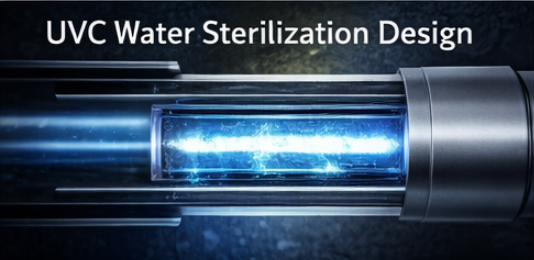
Molecular Mechanism of UVC LED Disinfection
Ultraviolet disinfection works by breaking biological structures essential for microbial survival. UVC radiation damages nucleic acids and denatures proteins, preventing replication.
Shorter wavelengths such as 230nm are strongly absorbed by peptide bonds and amino acid residues. This makes them effective in compact sterilization chambers where precise exposure is required.
Unlike chemical disinfectants, UV does not introduce residual contaminants, making it suitable for sensitive systems.
DNA and RNA Damage
Photons disrupt thymine bases in DNA strands, forming dimers that stop cellular reproduction. Even low doses can significantly reduce microbial activity.
Protein Absorption Region
Around 230nm, protein absorption peaks. This enhances microbial deactivation through structural damage instead of only genetic disruption.
Engineering Application
Precision optical emitters are required for predictable performance:
https://www.u-vcare.com/products/uvc-led-230nm-120%C2%B0-60%C2%B0-48-48mil
Conclusion
Understanding molecular interaction helps engineers design safer and more efficient sterilization systems.