
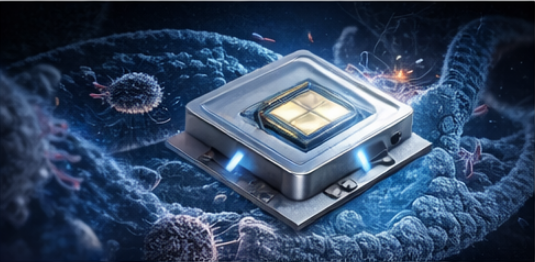
Understanding 230nm UVC LED Technology
UVC LEDs have rapidly become the preferred disinfection source in modern sterilization systems. Among various wavelengths, 230nm UVC LED occupies a special position because it provides strong microbial inactivation while maintaining controlled penetration depth.
Unlike traditional mercury lamps that emit broad UV spectra, UVC LEDs emit precise wavelengths designed for specific engineering applications.
Why 230nm Matters in Sterilization
Ultraviolet germicidal irradiation works by damaging nucleic acids in microorganisms. The 230nm range shows strong absorption by proteins and nucleic structures, allowing effective deactivation of bacteria and viruses in controlled environments.
This makes it suitable for:
-
Point-of-use water treatment
-
Micro-reactor sterilization
-
Surface sanitation modules
-
Closed-loop purification systems
Advantages Over Conventional UV Sources
Compared with mercury lamps:
• Instant start
• Directional output
• Low thermal load
• Compact integration
• Long operational stability
Engineers designing compact sterilization modules increasingly adopt precision-wavelength LEDs for better control and safety.
Selecting a Reliable 230nm UVC LED Component
For consistent optical performance and stable radiation intensity, choosing a properly packaged LED chip is critical.
A detailed specification example can be found here:
https://www.u-vcare.com/products/uvc-led-230nm-120%C2%B0-60%C2%B0-48-48mil
Conclusion
230nm UVC LED technology enables compact and energy-efficient sterilization systems and is becoming essential in next-generation sanitation engineering.