
Introduction
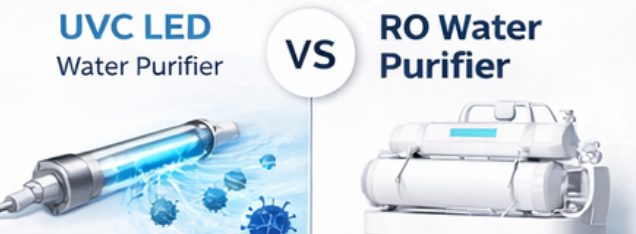
When choosing a water purification system for home use, two popular options often come up: RO water purifiers and UVC LED water purifiers. While both improve water quality, they serve different purposes.
This article compares UVC LED and RO systems to help homeowners decide which solution fits their needs best.
How RO Water Purifiers Work
RO (Reverse Osmosis) systems remove dissolved solids by forcing water through a semi-permeable membrane. They are effective at reducing minerals, salts, and some contaminants but often require:
-
Large installation space
-
High water waste
-
Frequent filter replacement
How UVC LED Water Purifiers Differ
UVC LED water purifiers focus on microbial disinfection rather than mineral removal. They:
-
Kill bacteria and viruses instantly
-
Do not alter water composition
-
Require minimal maintenance
Key Differences at a Glance
| Feature | RO Water Purifier | UVC LED Water Purifier |
|---|---|---|
| Removes bacteria | ❌ | ✅ |
| Removes minerals | ✅ | ❌ |
| Water waste | High | None |
| Maintenance | High | Low |
| Ideal for kitchen drinking water | ⚠️ | ✅ |
Which Is Better for Home Drinking Water?
For households with microbiological concerns and clean municipal water, UVC LED water purifiers are often the more efficient and economical choice—especially for kitchen drinking water points.
👉 View our UVC LED water purifier collection for home use
Conclusion
Both systems have advantages, but for compact, chemical-free disinfection at the point of use, UVC LED technology stands out.