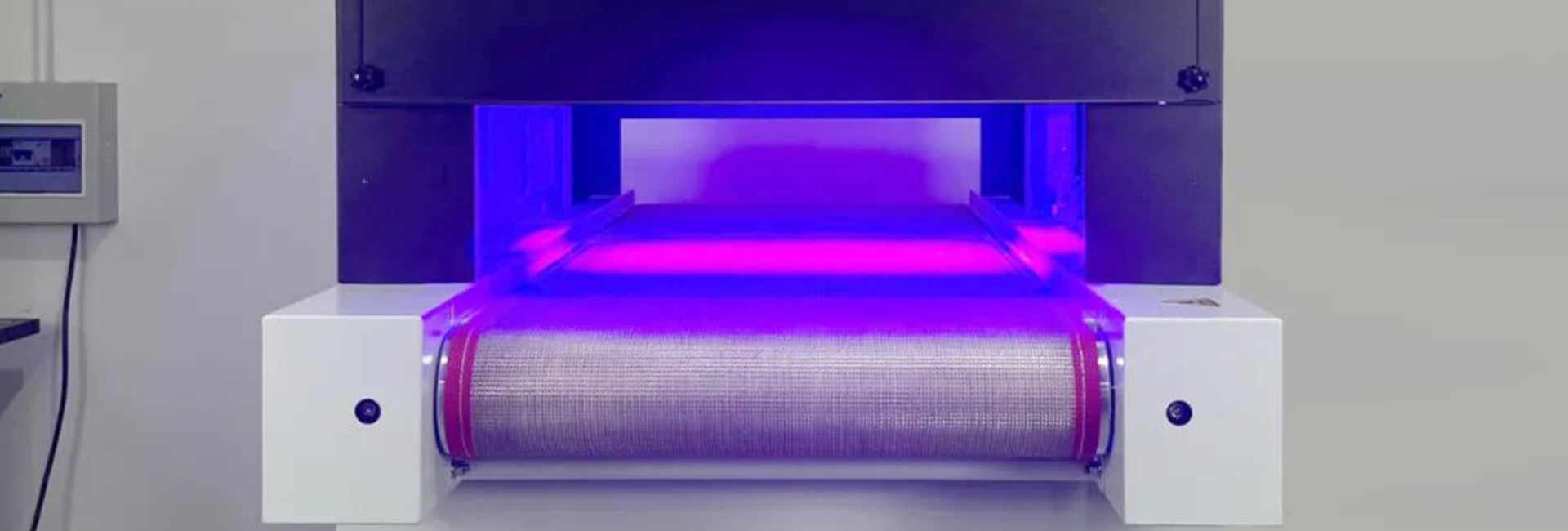
Technical advantages of UVA LED curing systems
⚡ Instant start-up, high-efficiency curing
🔋 Extra-long service life
💡 High energy efficiency and low heat load
🌱 Environmentally friendly and safe
Consult an engineer to assess your curing process.
I. Core Working Principle
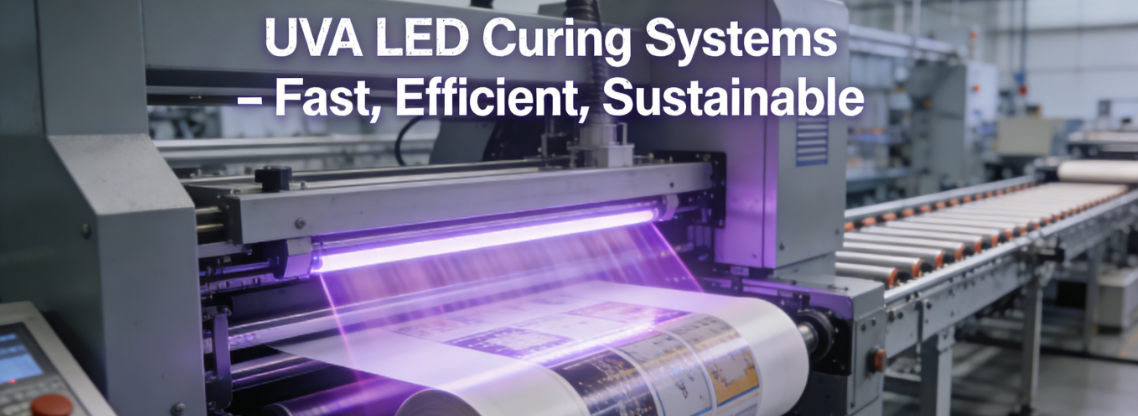
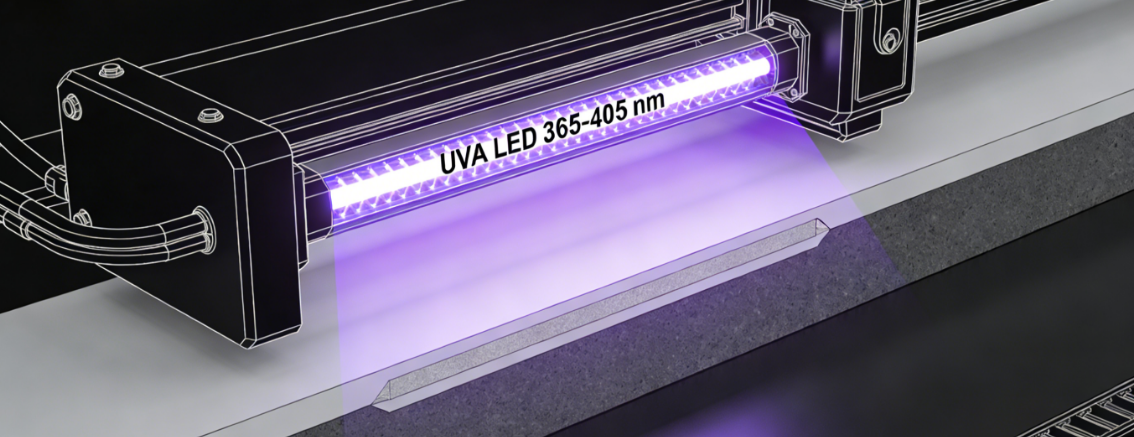
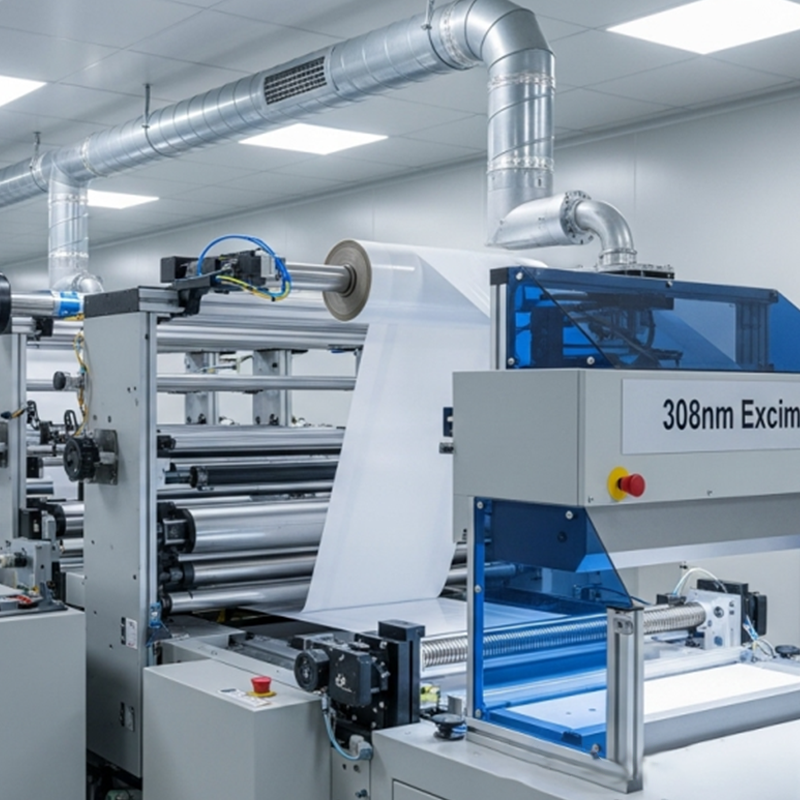
The curing process of UV-curable inks relies on a precise "photo-initiation-chemical polymerization" reaction. A specialized photoinitiator is added to the ink. When the ink comes into contact with a UV LED light source (primarily UVA LEDs with a wavelength of 320-400nm), the photoinitiator rapidly absorbs the light's energy and decomposes to produce free radicals or cations. These reactive species immediately trigger a chain polymerization reaction among monomers and oligomers within the ink system, crosslinking and curing the originally liquid ink in an extremely short time, instantly transforming it into a stable solid film and achieving rapid settling of the printed layer.
II. Customized Application Process
The curing process of UV-curable inks relies on a precise "photo-initiation-chemical polymerization" reaction. A specialized photoinitiator is added to the ink. When the ink comes into contact with a UV LED light source (primarily UVA LEDs with a wavelength of 320-400nm), the photoinitiator rapidly absorbs the light's energy and decomposes to produce free radicals or cations. These reactive species immediately trigger a chain polymerization reaction among monomers and oligomers within the ink system, crosslinking and curing the originally liquid ink in an extremely short time, instantly transforming it into a stable solid film and achieving rapid settling of the printed layer.
II. Customized Application Process
- Ink Selection and Adaptation: First, select UV-curable inks based on the printing substrate (e.g., paper, plastic, metal, etc.) and the end product application (e.g., food packaging, electronic component marking, etc.). Three key indicators should be considered when selecting a UV LED light source: ink adhesion to the substrate (to prevent post-production detachment), safety (e.g., compliance with non-migration standards for food contact applications), and process compatibility (including ink viscosity, color saturation, and post-curing gloss, as well as compatibility with printing equipment and visual requirements).
- UV LED light source selection and layout: Based on the absorption spectrum characteristics of the selected ink, the appropriate light source type (mercury lamp, metal halide lamp, or UV LED lamp) is determined, and the wavelength and light intensity are precisely matched. Furthermore, the output power and number of light sources to be installed are calculated and determined based on the actual printing speed (e.g., meters per minute) and print format size. This ensures that the light source energy evenly covers the printed area and meets the basic energy requirements for ink curing.
- Curing parameter optimization: Through small-batch experimental testing, key UV LED lamp curing parameters are gradually adjusted, including the duration of exposure to the ink, the actual output intensity, and the distance between the light source and the printed substrate surface.
Application Scenarios:
1. High-End Packaging Printing
For packaging printing applications such as cosmetics and premium alcoholic beverages, which demand stringent visual quality, UV-curable inks precisely meet the core demands of "high-end quality and durability." Printing results in a rich, high-gloss finish and high-definition, delicate pattern details. The cured ink film is highly hard and abrasion-resistant, effectively resisting minor friction and scratches during transportation and display, preventing pattern wear and gloss loss. This further highlights the product's premium positioning and quality, helping to enhance brand value.
2. Electronic Device Printing
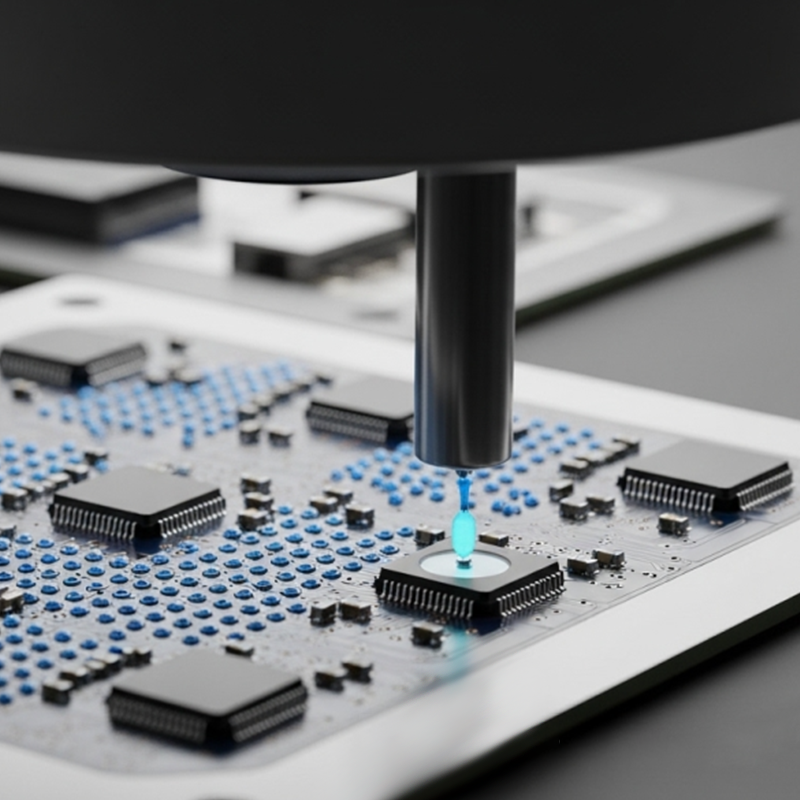
The fast-curing and weather-resistant properties of UV-curable inks are crucial for printing circuit board markings and electronic device casings. On the one hand, its fast curing speed adapts to the efficient production pace of the electronics manufacturing industry, avoiding the impact of time-consuming curing on production capacity. On the other hand, the cured ink layer can withstand the continuous heat generated by electronic equipment during operation and has excellent resistance to chemical corrosion (such as corrosion from cleaning agents and sweat). Its high surface hardness effectively prevents scratches during daily use, ensuring long-term legibility and resistance to peeling of printed signs, thereby ensuring the safety and appearance stability of electronic equipment.
3. Advertising and Signage Printing
For outdoor billboards and indoor wayfinding signs, UV-curable inks address the core challenges of "long-term color retention and environmental resistance." For outdoor advertising, the ink layer withstands the elements, such as wind, sun, and rain, reducing fading and peeling. For indoor signage, it resists dust and light abrasion, maintaining color vividness and image clarity over time, eliminating the need for frequent replacement or refurbishment. This reduces maintenance costs while ensuring the long-term and stable effectiveness of advertising and signage messaging.
For packaging printing applications such as cosmetics and premium alcoholic beverages, which demand stringent visual quality, UV-curable inks precisely meet the core demands of "high-end quality and durability." Printing results in a rich, high-gloss finish and high-definition, delicate pattern details. The cured ink film is highly hard and abrasion-resistant, effectively resisting minor friction and scratches during transportation and display, preventing pattern wear and gloss loss. This further highlights the product's premium positioning and quality, helping to enhance brand value.
2. Electronic Device Printing
The fast-curing and weather-resistant properties of UV-curable inks are crucial for printing circuit board markings and electronic device casings. On the one hand, its fast curing speed adapts to the efficient production pace of the electronics manufacturing industry, avoiding the impact of time-consuming curing on production capacity. On the other hand, the cured ink layer can withstand the continuous heat generated by electronic equipment during operation and has excellent resistance to chemical corrosion (such as corrosion from cleaning agents and sweat). Its high surface hardness effectively prevents scratches during daily use, ensuring long-term legibility and resistance to peeling of printed signs, thereby ensuring the safety and appearance stability of electronic equipment.
3. Advertising and Signage Printing
For outdoor billboards and indoor wayfinding signs, UV-curable inks address the core challenges of "long-term color retention and environmental resistance." For outdoor advertising, the ink layer withstands the elements, such as wind, sun, and rain, reducing fading and peeling. For indoor signage, it resists dust and light abrasion, maintaining color vividness and image clarity over time, eliminating the need for frequent replacement or refurbishment. This reduces maintenance costs while ensuring the long-term and stable effectiveness of advertising and signage messaging.
FAQ
Are UVA LEDs suitable for heat-sensitive materials?
Yes, UVA LED curing systems have a significantly lower heat load than traditional mercury lamps, making them ideal for heat-sensitive substrates.
What is the actual lifespan of UVA LEDs?
Under industrial conditions, typical lifespans can reach over 10,000–20,000 hours.
Are there any ozone or environmental risks?
UVA LED curing systems are mercury-free and ozone-free, meeting modern environmental and safety requirements.