
Get the latest news
If you have any needs regarding Far-UVC, please feel free to contact us for the latest Far-UVC product information or project progress.
Far-UVC Safe Sterilization
Scientific Evidence Supporting Far-UVC LED Safety and Antiviral Performance.
Recent research presented at MEDICA 2025 demonstrates that 235 nm Far-UVC LEDs achieved up to 99.999% inactivation of dangerous influenza viruses within seconds in university laboratory tests, highlighting the effectiveness and safety of Far-UVC LED technology for continuous disinfection in occupied environments.
Far-UVC Experimental Study
Díaz DFZ et al. Skin optical properties from 200 to 300 nm support far-UV-C applications (2023) (Learn more)
ICNIRP/Expert Summary Statement (Conference Materials): Far-UVC is generally safer at <≈230 nm, but needs to be evaluated according to exposure limits and measurement methods.
Experiments on human skin biopsy samples showed that 222 nm Far-UVC has very limited penetration into the skin surface. (Learn more)
No skin cancer, skin abnormalities, or pathological lesions were observed in animals after long-term (approximately 66 weeks, multiple hours per day) exposure to 222 nm Far-UVC. (Learn more)
ICNIRP/Expert Summary Statement (Conference Materials): Far-UVC is generally safer at <≈230 nm, but needs to be evaluated according to exposure limits and measurement methods.
Experiments on human skin biopsy samples showed that 222 nm Far-UVC has very limited penetration into the skin surface. (Learn more)
No skin cancer, skin abnormalities, or pathological lesions were observed in animals after long-term (approximately 66 weeks, multiple hours per day) exposure to 222 nm Far-UVC. (Learn more)
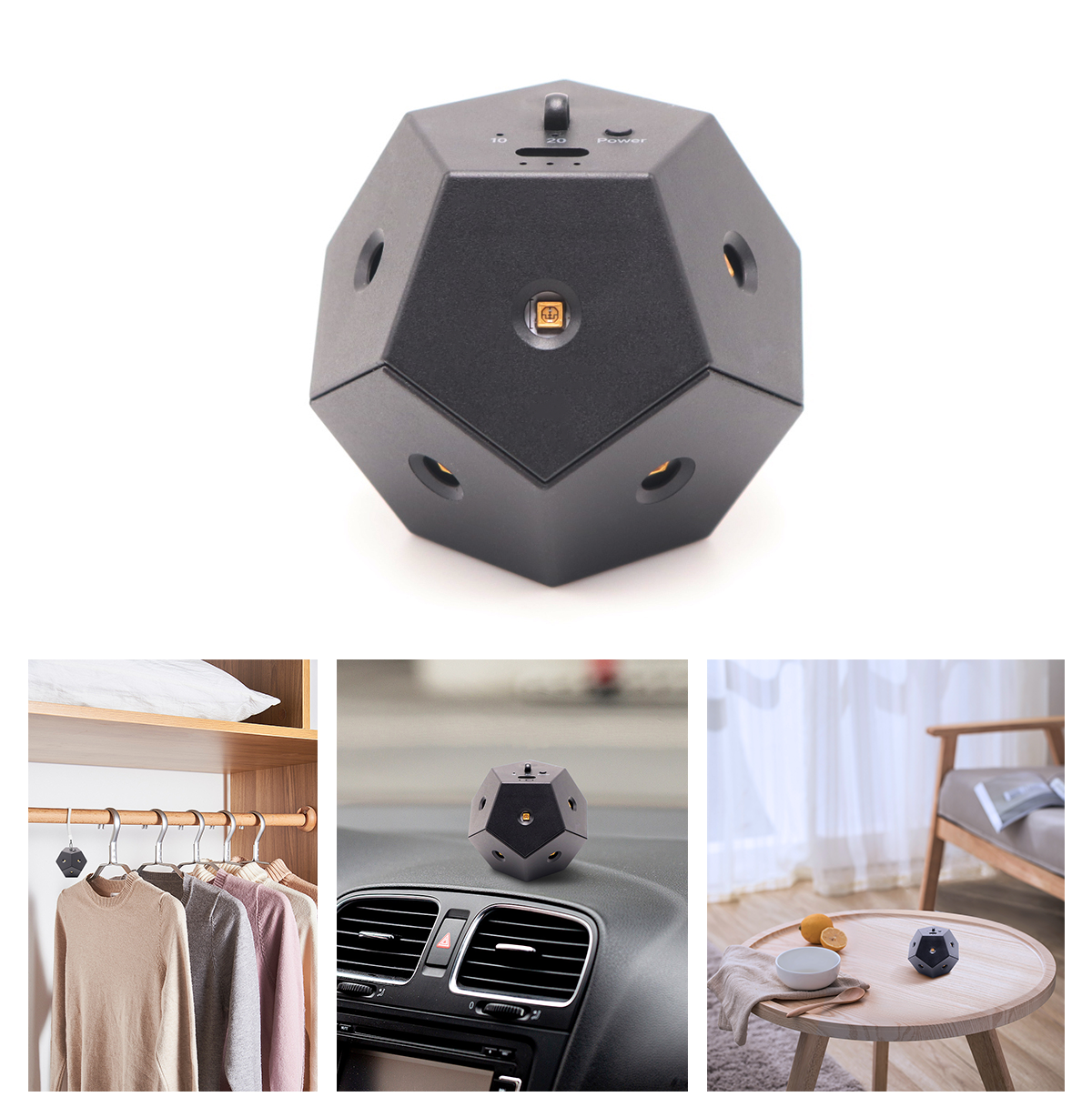
Far-UVC Pentagonal Sterilizing Balls
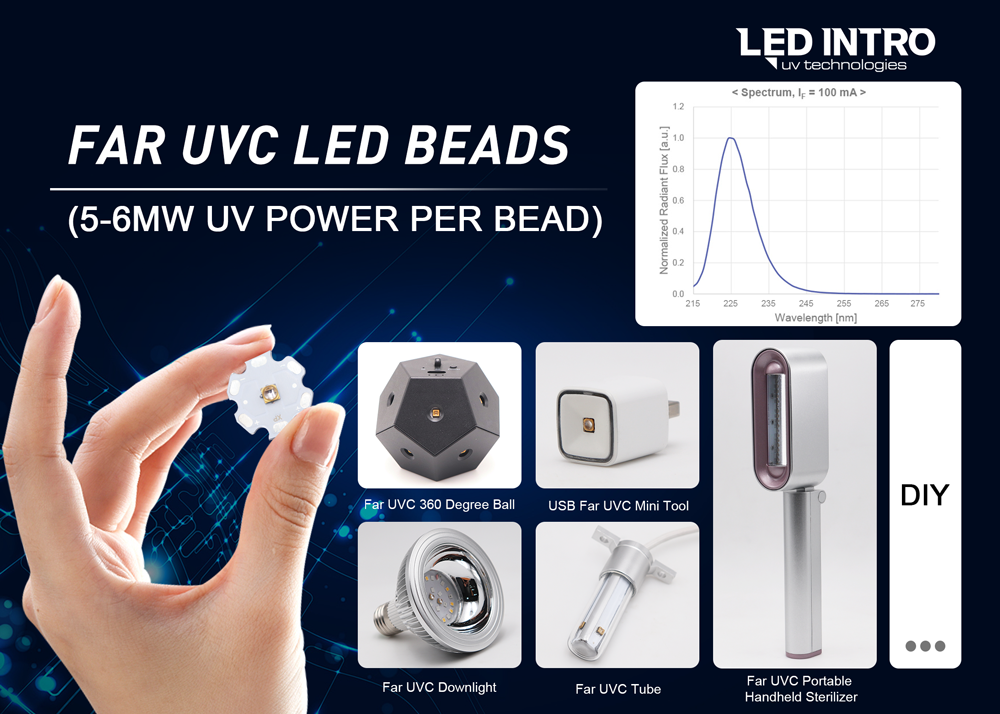
Far-UVC pentagonal sterilization balls are inlaid with ten UV LED beads and can use the 222nm ultraviolet band. 220-230nm ultraviolet rays cannot penetrate the skin layer and are harmless to human skin, so sterilization can be achieved in a way that allows humans and machines to coexist.
It is suitable for sterilization scenarios where the human body comes into direct contact, such as wardrobes, cars, and indoor spaces.
It is suitable for sterilization scenarios where the human body comes into direct contact, such as wardrobes, cars, and indoor spaces.