Parameter:
| Product Model |
Number of Light Sources |
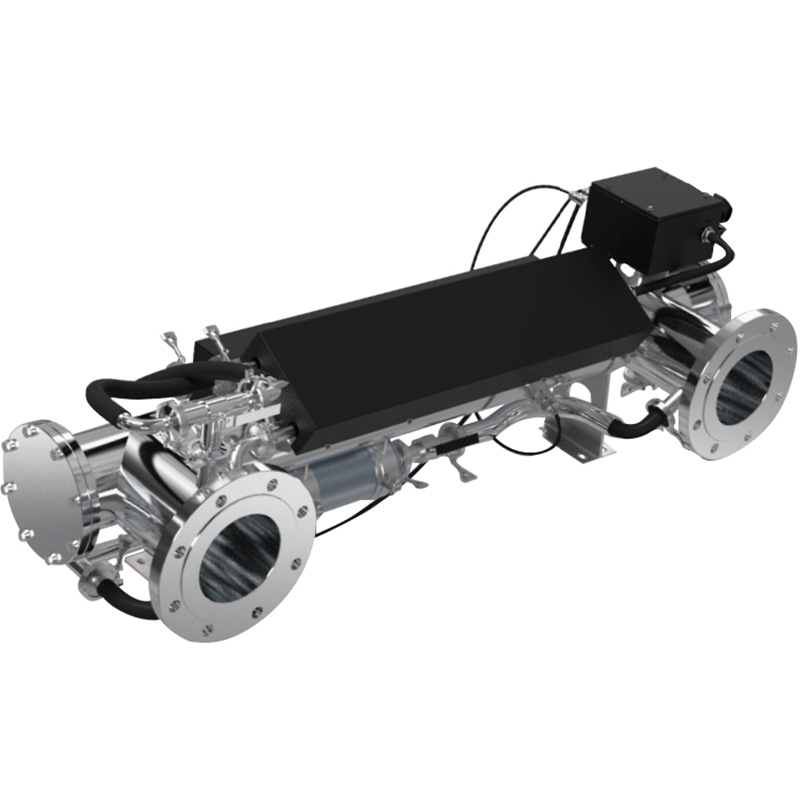
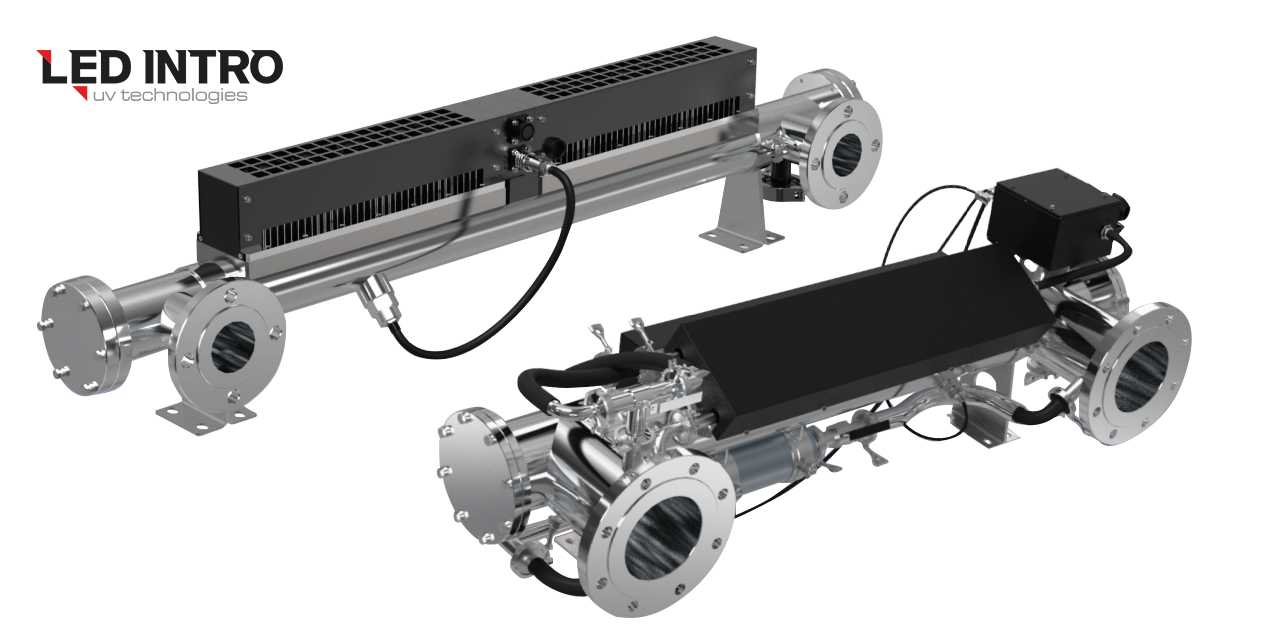
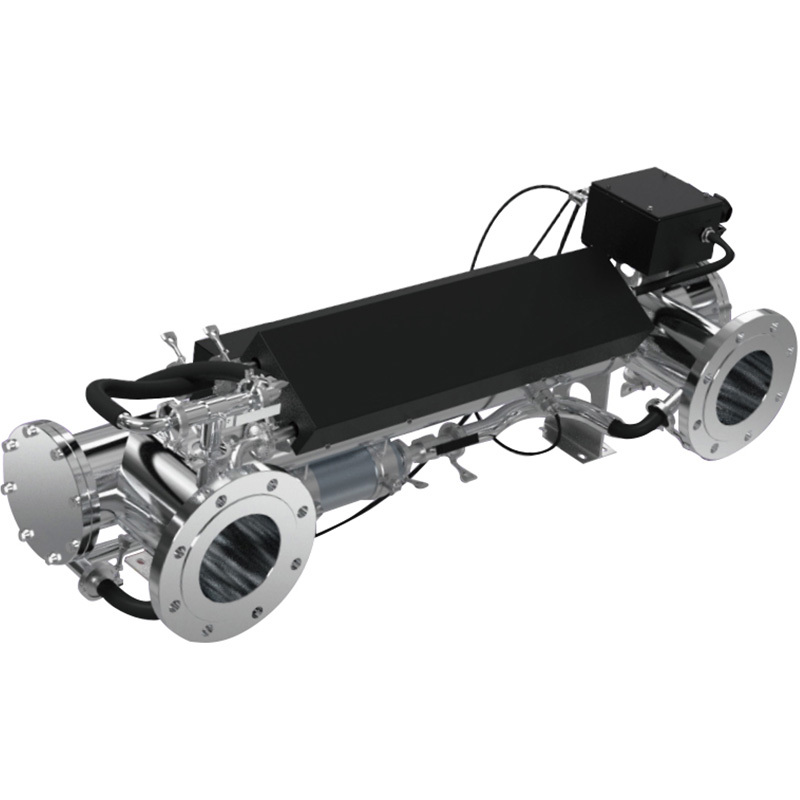
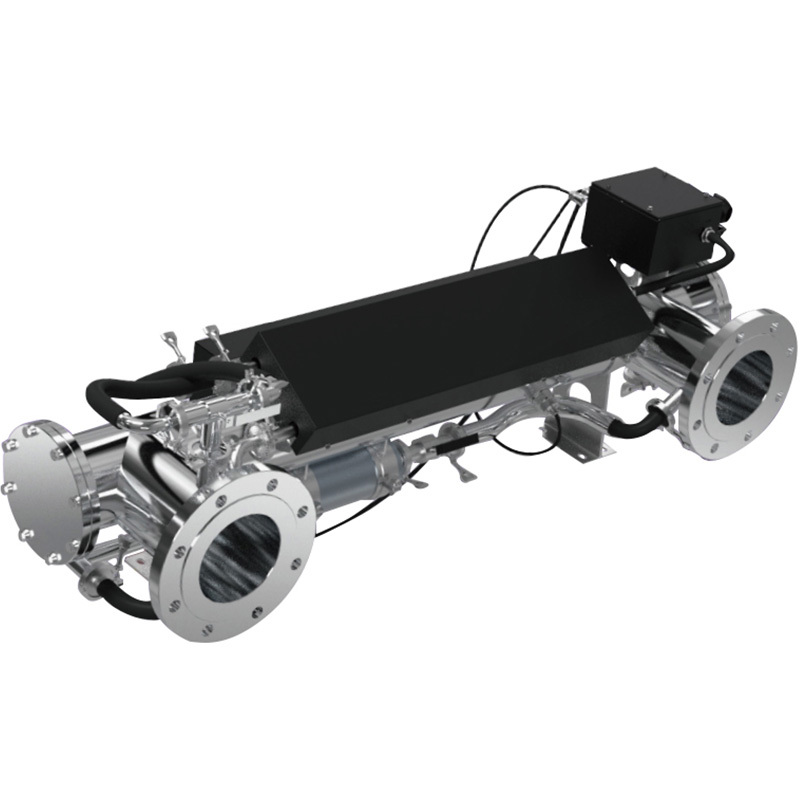
Reactor External Dimensions |
Reactor Installation Dimensions |
Control Cabinet Dimensions |
Remarks |
| |
|
A (mm) |
B (mm) |
C (mm) |
D (mm) |
E (mm) |
F (mm) |
G (mm) |
H (mm) |
L (mm) |
K (mm) |
M (mm) |
|
| LEDINTRO-Clean-A |
2 |
1170 |
930 |
262 |
182 |
11 |
880 |
55 |
48 |
450 |
180 |
450 |
10T/h |
| LEDINTRO-Clean-B |
1 |
1180 |
800 |
433 |
295 |
11 |
700 |
95 |
48 |
450 |
180 |
450 |
20T/h |
| LEDINTRO-Clean-C |
1 |
1180 |
800 |
433 |
295 |
11 |
700 |
95 |
48 |
450 |
180 |
450 |
30T/h |
| LEDINTRO-Clean-D |
2 |
1150 |
860 |
420 |
346 |
11 |
700 |
95 |
48 |
450 |
180 |
450 |
60T/h |
| LEDINTRO-Clean-E |
3 |
1300 |
900 |
500 |
360 |
12 |
1120 |
100 |
60 |
500 |
180 |
600 |
80T/h |
| LEDINTRO-Clean-F |
3 |
1500 |
1000 |
500 |
360 |
12 |
1220 |
100 |
60 |
500 |
180 |
600 |
120T/h |
Features:
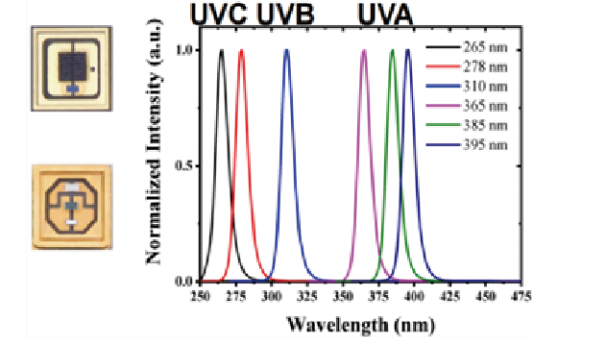
Through advanced geometric optics design, combined with multi-medium penetration simulation and physical field numerical simulation technology, ultraviolet light is precisely and fully injected into the reaction chamber, constructing a high-efficiency ultraviolet radiation area without shadow zones inside the chamber. This innovative design ensures that every corner of the water body can receive sufficient ultraviolet irradiation during the disinfection process, achieving all-round, blind-spot-free sterilization, and effectively avoiding sterilization blind areas caused by uneven light fields.
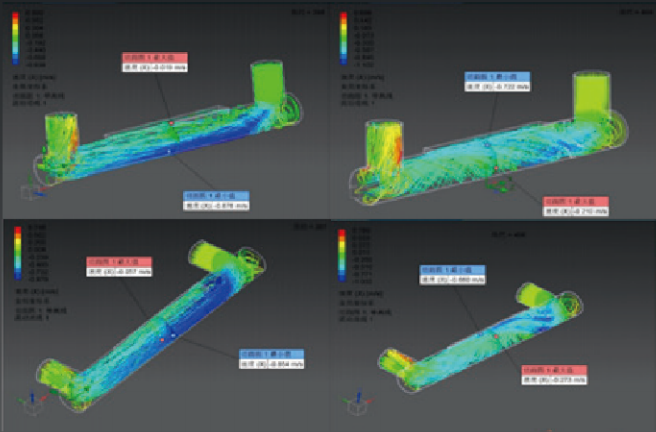
After in-depth research on water flow regimes, the system R&D team found that the maximum flow velocity has a significant impact on sterilization effectiveness. From the perspective of fluid mechanics principles, high-speed flowing water may cause microorganisms to stay in the ultraviolet irradiation area for too short a time, failing to receive sufficient ultraviolet exposure and thus reducing sterilization efficiency.
Our team successfully reduced the maximum flow velocity by cleverly adjusting the posture of the inlet and outlet, making the water rotate through the irradiation area. This design not only improves sterilization effectiveness but also makes the water absorb ultraviolet radiation doses more evenly. The rotating water flow can fully expose microorganisms in the water to ultraviolet light, ensuring that each microorganism receives an adequate sterilization dose, thereby significantly enhancing the overall sterilization efficiency.
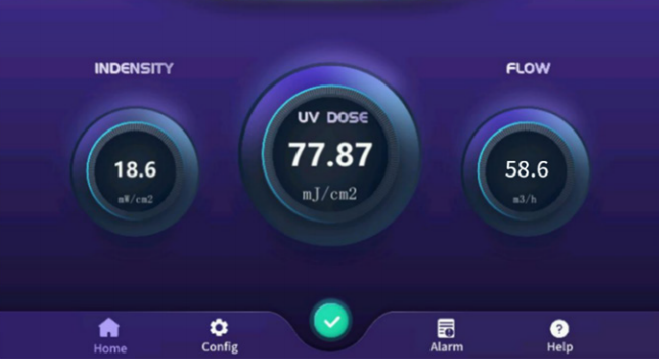
The human-machine interface of the UVC LED ultraviolet sterilizer for secondary water supply is designed to be concise and clear. Through the interface, operators can intuitively and clearly understand the device’s main operating parameters such as current dose, light intensity, and flow rate. At the same time, they can conveniently view device logs and alarm information via the menu, making the operation process simple and easy to understand.
This concise and clear interactive design reduces the learning cost for operators, improves the operation and maintenance efficiency of the device, and makes equipment management more convenient and efficient.
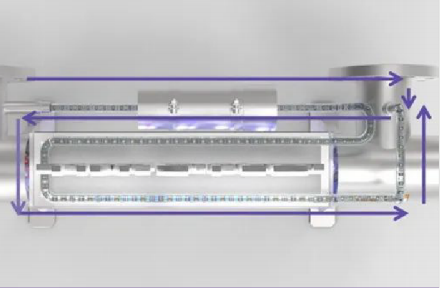
The high-power LED ultraviolet sterilizer adopts an advanced water cooling method, directly using the water in the pipeline to dissipate heat from the light source. No additional dedicated equipment is required, which greatly saves investment costs. Meanwhile, this technology features small size and high efficiency.
Through an AI control algorithm, the light intensity and cooling water volume can be adjusted in real time according to changes in processing capacity, achieving energy conservation and consumption reduction. In addition, the quartz light window maintains the same temperature as the water, effectively alleviating scaling issues. Moreover, maintenance is convenient: the light source can be disassembled and maintained without stopping the water supply or switching the pipeline.
Monitoring of actual operating equipment shows that after adopting this cooling technology, the service life of the light source can be extended by 30%-50%
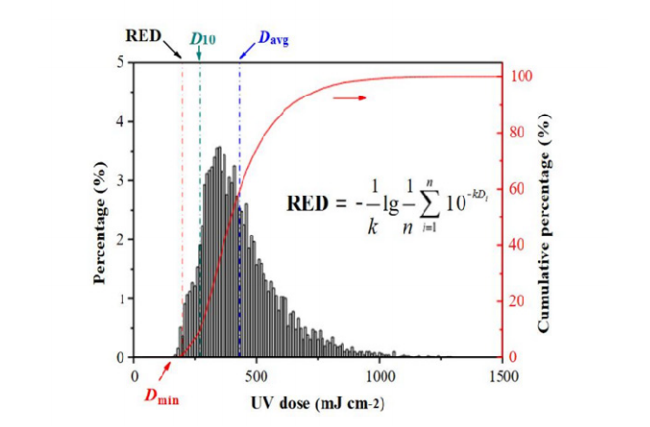
The internationally leading UVC LED reactor RED-CFD design is adopted. The light source does not require a sleeve to be immersed in water, which makes the flow regime more reasonable and facilitates the coupling of the light field and flow field. The high-reflection design further improves UV light efficiency, and the DC power supply method eliminates the need for a high-frequency ballast, allowing direct connection to a photovoltaic power source for efficient energy utilization.
At the same time, this design features lower head loss, a smaller overall device volume, and reduced installation space requirements. Through RED-CFD coupled simulation analysis, core parameters such as the device’s UV sterilization dose, light source configuration, water flow velocity, and UVT can be precisely quantified, ensuring excellent product performance and reliable operation, and providing users with a stable and efficient disinfection solution.
The UV-C LED ultraviolet sterilizer for secondary water supply adopts a modular design concept, where the light source and reaction chamber are independent of each other. Ultraviolet light is evenly introduced into the water body through the high-transparency quartz glass on the reaction chamber. Under the premise of uninterrupted water supply, if a module malfunctions, it can be replaced quickly, ensuring the continuous and stable operation of the equipment.
The UV-C LED ultraviolet sterilizer starts up rapidly and can reach peak power instantly without preheating (traditional mercury lamps require 15-30 minutes of preheating, and their light intensity rises slowly). The startup and shutdown operations of the equipment will not damage its service life (frequent startups and shutdowns cause a sharp decline in the lifespan of traditional mercury lamps), and it can be linked and adjusted with flow rate, residual chlorine, and UVT to accurately adapt to different working conditions.